



- Home
- Cranio Maxillofacial ( CMF ) Instruments
- Bone Holding forceps
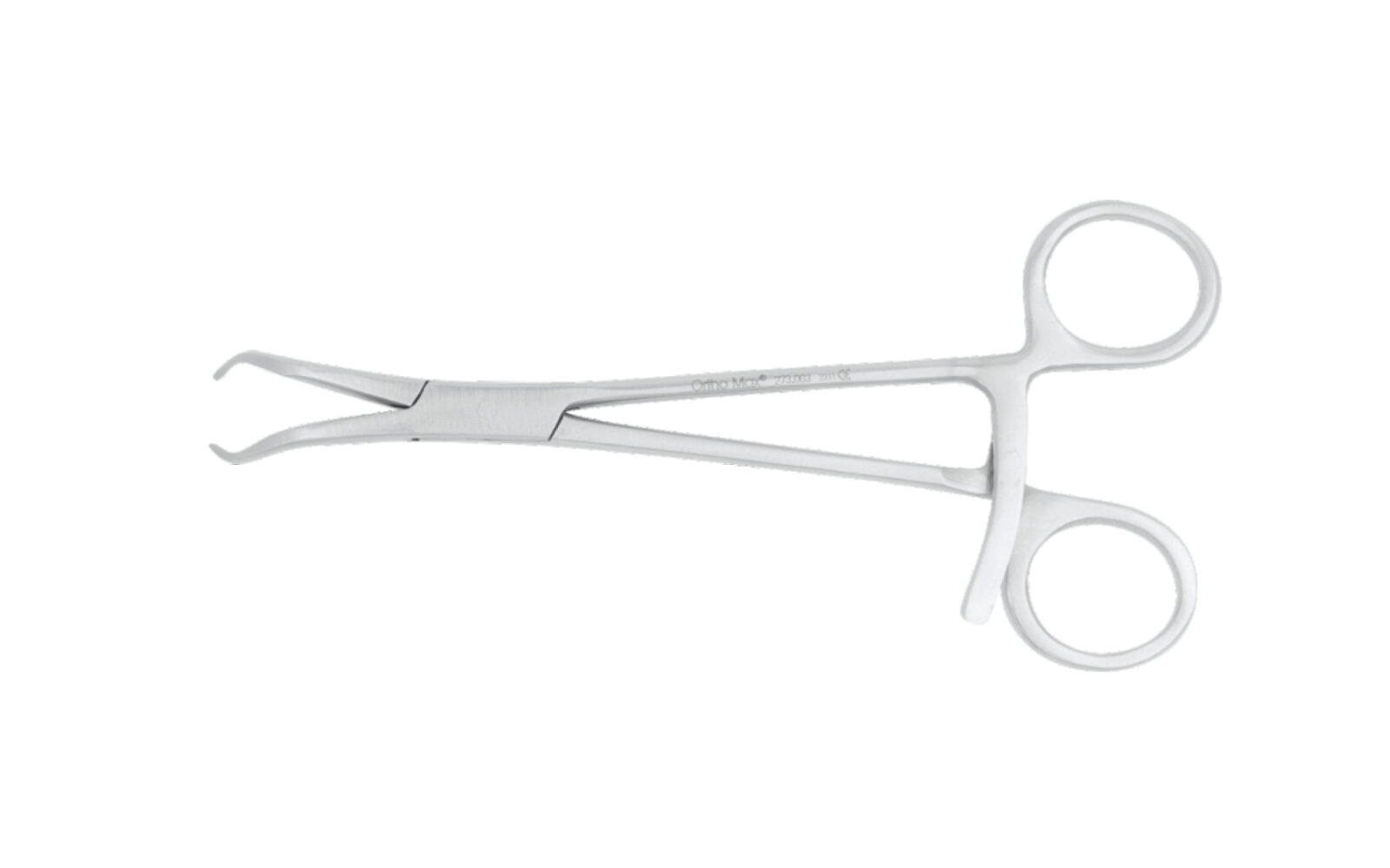
- Reduction Bone Holding Forceps Serrated
Basic Bone Plating Instruments +
Bone Holding forceps +
Reduction Bone Holding Forceps Serrated with Ratchet
|
Reference
|
|---|
|
275.001
|
Intended Use
Specifically designed for cranio-maxillofacial, reconstructive, and ENT procedures, Walsham Nasal Forceps are primarily indicated for the closed reduction and precise realignment of displaced nasal bone fractures. They are indispensable for repairing severe midface trauma, correcting lateral structural deformities, and restoring both aesthetic symmetry and nasal airway function.
Function
Unlike standard septal forceps that operate entirely inside the nose, Walsham forceps utilize a specialized, asymmetric blade design. The slimmer, straight blade is carefully inserted into the nasal cavity directly beneath the fractured bone. Simultaneously, the wider, contoured blade is positioned externally against the nasal skin. This configuration allows the surgeon to securely clamp individual lateral nasal bone fragments, gently elevating, out-fracturing, or manipulating them into proper anatomical alignment without slippage.
Advantages
- Targeted Bone Manipulation: Engineered specifically to grasp and mobilize the lateral nasal walls and bridge, offering superior control over individual bone segments.
- Soft Tissue Protection: The smoothly contoured external blade distributes pressure evenly, actively minimizing bruising, tearing, and crushing trauma to the external nasal skin.
- Ergonomic Leverage: Robust shanks and handles provide the surgeon with excellent tactile feedback and mechanical advantage for safe, controlled reduction.
How do Walsham forceps differ from Asch forceps?
Asch forceps use two internal blades to straighten the central nasal septum. In contrast, Walsham forceps are used for the lateral nasal bones, with one blade positioned internally and the other resting externally.
Are these instruments fully autoclavable?
Yes. Forged from premium surgical-grade stainless steel, they are highly durable, completely rust-resistant, and fully compatible with repeated autoclave sterilization cycles.