



Revolutionizing Jaw Function: The Complete Clinical Guide to the JomaxTM Total TMJ Prosthesis

For patients battling end-stage temporomandibular joint (TMJ) disorders, the loss of fundamental jaw function—whether speaking, chewing, or simply opening the mouth—is profoundly debilitating. When conservative therapies, arthroscopy, and prior surgical interventions fail to yield results, total joint replacement often becomes the definitive reconstructive path.
Expect the unexpected movement. The JomaxTM Total TMJ Prosthesis system is engineered to provide advanced, functional, and exceptionally smooth jaw restoration for patients facing severe anatomical joint degradation. By combining superior biomaterials with precision-milled anatomical designs, this total TMJ replacement system offers maxillofacial surgeons a highly reliable solution for complex reconstructions.
Here is an in-depth breakdown of the biomechanical engineering, specific clinical indications, and structural advantages behind the Jomax Total TMJ Prosthesis.

The Biomechanical Engineering of the Jomax System
A successful total TMJ replacement requires a delicate balance between rigid fixation and frictionless articulation. The Jomax system achieves this through three highly specialized, interrelated components designed for long-term survivability.
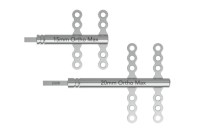
1. The Mandibular TMJ Prosthesis
This component replaces the native mandibular condyle and is tasked with withstanding the intense, repetitive multi-directional forces generated during mastication (chewing).
- Premium Biomaterials: The prosthesis is Manufacture from Titanium Alloy (Ti 6Al 4V Grade V). This specific alloy is the gold standard in orthopaedic and maxillofacial implants due to its exceptional strength-to-weight ratio and superior biocompatibility, ensuring the body accepts the implant without adverse immunological reactions.
- Frictionless Articulation: The head surface of the prosthesis is highly polished. This ultra-smooth finish drastically reduces mechanical wear when articulating against the fossa socket, promoting fluid, natural joint mobility.
- Enhanced Osteointegration: While the head is polished, the bottom surface interfacing with the mandible is precisely milled. This textured surface encourages rapid osteointegration (the structural connection between living bone and the implant), ensuring long-term stability.
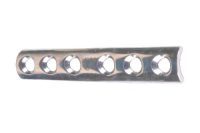
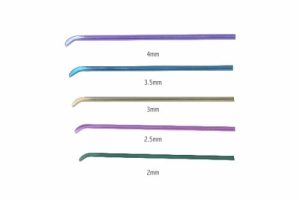
- Versatile Surgical Fixation: The prosthesis stem features holes designed to accept both locking 2.5 mm Screws and non-locking ø 2.5mm screws. This grants surgeons the intraoperative flexibility to achieve rigid fixation depending on the patient’s specific bone density.
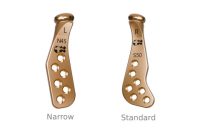
- Anatomical Sizing: To accommodate diverse patient anatomies, it is available in Standard (45mm and 50mm) and Narrow (40mm and 45mm) profiles for both the left and right sides.
2. The Fossa Component
The socket is just as critical as the condyle. The Jomax Fossa is uniquely tailored to ensure seamless, stable articulation.
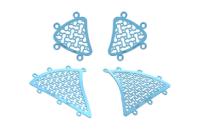
- Demographic-Specific Design: A major advantage of the Jomax system is its specialized contouring. It is anatomically designed to match the Asian patient’s fossa component, which significantly reduces the need for extensive surgical modification and improves the native fit.
- Advanced Wear Resistance: The fossa is milled from medical-grade UHMWPE (Ultra-High-Molecular-Weight Polyethylene). This polymer is highly resistant to abrasion and impact, making it the ideal counterpart to the polished titanium condyle.
- Secure Adaption: It features a specially designed screw arch to ensure optimal seating against the skull base, accepting ø 2mm screws.
- Configurable Sizing: It is available in Small, Medium, and Large sizes (Left and Right).
3. The Fossa Washer
Though small, the Fossa Washer plays a vital role in protecting the structural integrity of the entire reconstruction.
- Material and Profile: Manufactured from pure Titanium Grade II, it features a low-profile design that adds minimal bulk to the surgical site.
- Mechanical Protection: The washer provides essential compressive strength to the UHMWPE fossa component. Crucially, it protects the fossa holes from stripping and prevents screw head penetration under heavy occlusal loads.
All components undergo rigorous mechanical and biocompatibility testing in laboratory settings to guarantee a longer service life and are supplied in gamma-radiated sterile packaging to eliminate contamination risks.
Clinical Indications: When is Jomax the Definitive Solution?
Total TMJ replacement is a major intervention reserved for severe joint pathology. The Jomax Total TMJ Prosthesis is specifically indicated for patients presenting with:
- Severe Joint Degeneration: Advanced Rheumatoid Arthritis or Severe Degenerative Joint Disease where the articular cartilage and bone are completely eroded.
- Joint Fusion: Bony Ankylosis (bone-to-bone fusion) or Recurrent Fibrous Ankylosis (scar tissue fusion) that strictly limits mouth opening.
- Structural Deformity: Avascular Necrosis (bone death due to lack of blood supply) resulting in functional joint deformity.
- Trauma and Oncology: Massive loss of the condyle due to severe traumatic fractures, or tumors and malignancies involving the condyle and mandibular ramus that require complete resection.
- Surgical Salvage: Patients who have undergone two or more previous, unsuccessful TMJ surgeries and require a complete system overhaul.
Strict Contraindications
Proper patient selection is the primary determinant of surgical success. The Jomax system is strictly contraindicated in cases involving:
- Infection: Any active or chronic systemic or local infection at the surgical site.
- Inadequate Bone Stock: Insufficient quantity or poor quality of host bone that cannot safely support the implant components, particularly at the skull zygomatic area articular base (fossa component).
- Growing Patients: Skeletally immature patients whose facial bones are still developing. Rigid implants do not grow with the patient and can cause severe developmental facial asymmetry.
Frequently Asked Questions (FAQ)
What is the Jomax Total TMJ Prosthesis made of?
The mandibular condyle component is constructed from high-strength Titanium Alloy (Ti 6Al 4V Grade V) with a polished head and milled base. The fossa component is made from medical-grade UHMWPE (Ultra-High-Molecular-Weight Polyethylene), and the protective fossa washer utilizes Titanium Grade II.
Why is UHMWPE used for the Fossa component?
UHMWPE is an advanced medical polymer known for its extremely low friction coefficient and high impact strength. When paired with a polished titanium condyle head, it creates a smooth, wear-resistant bearing surface that mimics natural jaw articulation and extends the lifespan of the implant.
Is the Jomax system designed for a specific demographic?
Yes, the fossa component of the Jomax system features a unique anatomical contouring specifically designed to adapt to the anatomical curvature of the Asian patient’s fossa component. This specialized design improves seating, reduces operating time, and minimizes the need for heavy bone modification.
How does the implant integrate with the patient’s natural bone?
The bottom surface of the titanium mandibular prosthesis is specifically milled and textured. This rougher micro-surface encourages osteointegration—a biological process where the patient’s native bone cells grow into the implant’s surface, creating a permanent, highly stable mechanical bond.
Who is an ideal candidate for total TMJ replacement?
Ideal candidates are adult, skeletally mature patients suffering from end-stage TMJ disorders. This includes individuals with bony ankylosis, advanced rheumatoid arthritis, severe trauma, joint-destroying tumors, or those who have failed multiple previous TMJ surgeries.
Can a TMJ implant be placed in a patient with active dental infections?
No. Active or chronic infections—whether local (like severe periodontitis or an abscess) or systemic—are absolute contraindications for any total joint replacement. Infections can easily seed to the implant hardware, leading to implant failure and the need for immediate surgical removal.
Why are holes important in the surgical placement of the prosthesis?
holes allow the surgeon to use both locking and non-locking screws (ø 2.5mm) within the same plate. This provides immense flexibility during surgery, allowing the surgeon to customize the fixation strategy based on the thickness and density of the patient’s jawbone, ensuring the most stable outcome possible.


About us
Ortho Max® Legacy Forged in Vision, Strengthened by Generations.
For over 33 years, Ortho Max® has been a pioneer in orthopaedic and maxillofacial implants earning a reputation of trust, quality, and innovation in the healthcare industry.